

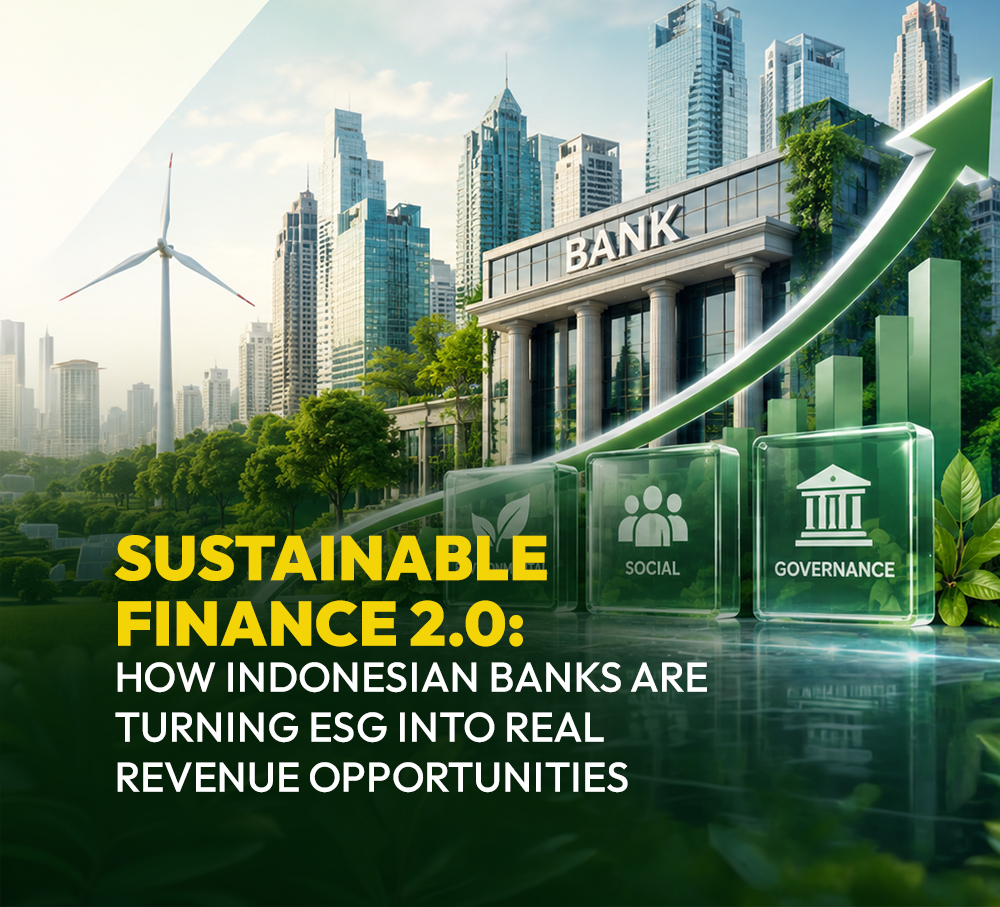
Indonesia’s financial sector is moving towards a model where sustainability is closely tied to economic expansion and social inclusion. ESG (environmental, social, and governance) standards are actively shaping how institutions allocate capital, manage risk, and build trust with stakeholders.
For leaders across the finance industry, this shift reflects both regulatory direction and investor expectations. As Indonesia strengthens its position in the regional economy, sustainable finance is emerging as a practical framework to support long-term growth, expand financial access, and improve accountability across institutions.
Rising Importance of Sustainable Finance in Indonesia
Sustainable finance is rapidly gaining ground in Indonesia, emerging as a critical tool to bridge a $1.7 trillion SDG financing gap, combat climate change, and drive long-term economic growth. Driven by OJK regulations, Indonesia has become a leader in ‘green sukuk’ and is increasingly adopting environmental, social, and governance (ESG) criteria to attract investment for renewable energy and biodiversity projects.
For leaders across the finance industry, this shift reflects a stronger alignment between national priorities and global investor expectations.
Key Aspects of Sustainable Finance in Indonesia:
- Regulatory Framework: The Financial Services Authority (OJK) mandates that financial institutions integrate environmental and social aspects into risk management and publish annual sustainability reports. This regulatory push is frequently discussed at every financial services conference, where compliance and reporting standards remain a core focus.
- Green Sukuk Leader: As of 2023, Indonesia is the world’s largest issuer of sovereign ‘green sukuk,’ totaling over USD 6.9 billion to fund climate projects, reinforcing its position in global sustainable finance markets.
- Innovation in Finance: The market is diversifying with blue bonds for marine conservation, sustainability-linked loans (SLLs), and Islamic green finance, expanding the range of ESG-aligned financial instruments.
- Overcoming Hurdles: While progress is strong, challenges include high initial project costs, technical capacity gaps, and the need to improve green project pipelines – all constituting key discussion points at every financial leadership summit.
ESG Frameworks Shaping Financial Decision-Making
Indonesian financial decision-making is heavily influenced by mandatory ESG disclosures (POJK 51/2017) and the Green Taxonomy, shifting capital towards sustainable investments and reducing debt costs for high-ESG performers.
Key frameworks, including TCFD, GRI, and SASB, are being integrated to combat greenwashing and guide investment in net-zero transitions.
Key ESG Frameworks and Regulations Shaping Decisions:
- POJK 51/2017 & Sustainability Reporting: The Financial Services Authority (OJK) mandates that financial institutions and public companies submit annual sustainability reports, driving transparency in environmental and social impacts.
- Indonesian Green Taxonomy: This framework classifies economic activities to guide investment and lending, particularly for renewable energy and sustainable projects, with increased scrutiny on “greenwashing.”
- Draft Climate Change Law: Slated for 2026, this legislation aims to create a unified, binding legal basis for climate governance, merging various sectoral regulations to enforce net-zero targets.
- Integration with International Standards: Large Indonesian firms are increasingly adopting GRI (stakeholder impact), SASB (financial materiality), and TCFD (climate risk) to attract foreign investment.
Transparency is essential for building stakeholder trust. Clear and measurable ESG indicators allow investors, regulators, and customers to evaluate the authenticity of sustainability claims. As discussions continue at every major financial services conference, the focus remains on improving accountability and ensuring that ESG commitments translate into measurable outcomes.
Driving Financial Inclusion Through ESG Initiatives
One of the most impactful aspects of ESG-driven finance is its ability to support financial inclusion. In Indonesia, a significant portion of the population still lacks access to formal financial services. ESG initiatives are helping bridge this gap by aligning sustainability goals with inclusion strategies.
Green financing and social impact funds are being used to extend credit to underserved communities, and small and medium-sized enterprises (SMEs). These initiatives not only promote environmental responsibility but also create economic opportunities at the grassroots level.
Responsible lending practices are also evolving. Financial institutions are designing products that cater to low-income groups while maintaining risk discipline. This includes microfinance solutions, digital banking services, and community-based financing programs.
The outcomes of these initiatives are measurable. Increased access to credit, improved financial literacy, and enhanced economic participation are contributing to broader social development. ESG-led inclusion programs are demonstrating that sustainability and accessibility can work together to support national growth objectives.
The Role of Banks, Fintechs, and Investors in ESG Adoption
The adoption of ESG principles in Indonesia is shifting from voluntary reporting to mandatory, outcome-based compliance, driven by OJK regulations and global investment expectations. Banks, fintech firms, and investors are central to this transition, aligning strategies with Indonesia’s Net Zero 2060 target, the expansion of the Indonesia Taxonomy for Sustainable Finance (TKBI), and upcoming IFRS S1 and S2 reporting standards.
Banks as Primary Drivers of ESG Integration
Banks are moving beyond traditional lending to actively monitoring the ESG impact of their portfolios.
- Mandatory compliance: OJK requires integration of ESG into governance, risk management, and internal assessments, including stricter sustainability disclosures.
- Green portfolio expansion: Incentives from Bank Indonesia are encouraging lending towards sectors like waste management, water infrastructure, and green buildings.
- Data-driven reporting: Institutions are transitioning from static disclosures to real-time ESG tracking, preparing for third-party verification requirements.
Fintechs Enabling Scalable and Inclusive ESG Adoption
Fintech firms are accelerating ESG integration through technology, particularly for SMEs with limited reporting capabilities.
- Efficient green finance: Digital platforms reduce capital deployment costs and improve transparency using AI, blockchain, and automated systems.
- Alternative credit insights: ESG-linked credit scoring models help assess environmental and social risks more accurately.
- Sustainable investment access: Digital investment platforms are enabling broader participation in ESG-focused opportunities, especially among younger investors.
Investors Driving Accountability & Market Discipline
Investors are increasingly shaping ESG adoption by linking capital access to sustainability performance.
- Demand for reliable data: Standardized and verifiable ESG disclosures are becoming essential for attracting both domestic and global capital.
- Focus on long-term value: ESG metrics are now integral to managing climate risks and ensuring financial stability.
- Growth of ESG-linked products: Rising demand for ESG-themed funds and indices is rewarding companies that meet higher sustainability standards.
This collective shift is reinforcing ESG as a core operational priority, with ongoing discussions at every global finance conference highlighting how collaboration across banks, fintechs, and investors can accelerate sustainable finance adoption at scale.
Industry Collaboration & Knowledge Sharing Platforms
Collaboration is critical for advancing sustainable finance. Industry platforms bring together regulators, financial institutions, investors, and technology providers to share insights and align strategies.
These gatherings provide opportunities to discuss challenges, exchange best practices, and explore partnerships. Case studies and real-world examples help organizations understand how ESG principles can be implemented effectively.
Knowledge-sharing platforms also play a role in standardizing approaches and improving reporting practices. By fostering collaboration, they help accelerate the adoption of sustainable finance across the region.
For decision-makers, these events offer valuable insights into emerging trends, regulatory developments, and innovative solutions. They also provide a space to build relationships and identify opportunities for collaboration.
Connect with Experts in Sustainable Finance & Inclusive Financial Growth at WFIS!
The World Financial Innovation Series (WFIS), taking place on 27–28 October 2026 at Raffles Jakarta, brings together regulators, banks, fintech leaders, and investors who are actively shaping ESG-driven finance in Indonesia.
Engage with experts tackling inclusion gaps, sustainability reporting, and responsible lending — and walk away with the insights, partnerships, and strategies needed to align ESG priorities with real business growth.