

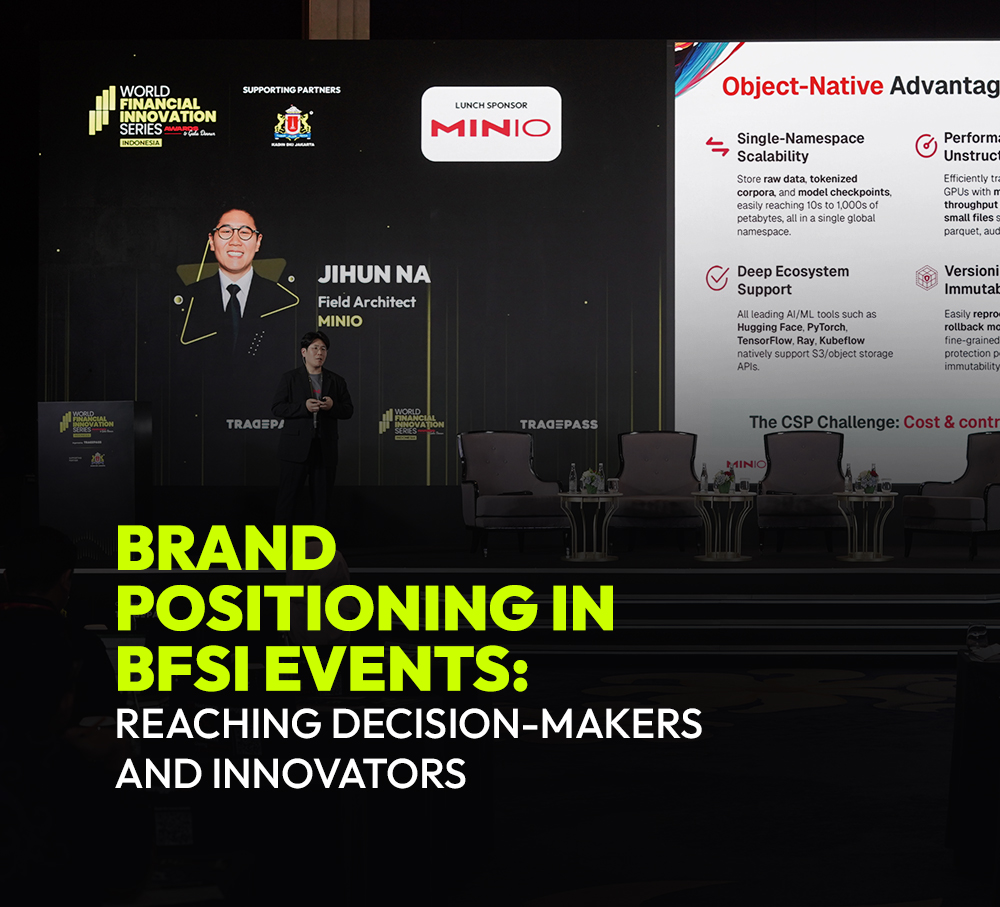
Financial institutions, fintech companies, technology providers, and consulting firms operate in an industry where credibility directly influences partnerships, investments, and customer confidence. In such a competitive environment, industry events offer far more than networking opportunities. They create a focused environment where brands can demonstrate expertise, connect with influential stakeholders, and strengthen their market presence. A well-planned presence at a major BFSI conference can help organizations engage senior executives, regulators, investors, and innovation leaders who actively shape financial strategies and purchasing decisions. As competition intensifies across banking and financial services, companies are increasingly using industry gatherings to build authority, generate qualified leads, and create long-term business relationships.
Why BFSI Events Are Critical for Strategic Brand Positioning
BFSI events play a major role in strategic brand positioning because they function as trusted, high-engagement platforms for industry interaction. In a sector built on trust, compliance, and financial accountability, direct engagement often creates stronger impact than traditional advertising campaigns.
Establishing Authority and Industry Trust
Participating in panel discussions, keynote sessions, or expert workshops allows organizations to contribute meaningful insights on topics such as AI adoption, cybersecurity, financial inclusion, risk management, and regulatory compliance. This level of visibility positions a company as an informed industry participant rather than simply a service provider.
For many attendees, thought leadership delivered during live discussions carries more influence than standard promotional messaging. Brands that consistently contribute valuable perspectives often gain stronger recognition among institutional buyers and decision-makers.
Connecting with High-Value Decision-Makers
Industry events provide direct access to CXOs, regulators, policymakers, banking leaders, and technology heads in a focused professional setting. Unlike cold outreach campaigns, in-person engagement enables meaningful conversations that support relationship building and business discussions.
Senior leaders attending these events are often responsible for strategic partnerships, procurement decisions, infrastructure investments, and innovation planning. This concentration of authority makes BFSI gatherings highly valuable for business development teams and sponsors.
Accelerating Partnerships and Business Opportunities
Exhibiting and sponsorship participation help organizations attract qualified leads with genuine business interest. Instead of broad audience targeting, BFSI-focused events gather a concentrated group of stakeholders with purchasing influence and industry relevance.
This environment supports collaboration between banks, fintech providers, insurers, payment companies, cybersecurity firms, and technology vendors seeking partnership opportunities.
Demonstrating Technology and Innovation
Financial institutions increasingly rely on live demonstrations and interactive presentations to showcase new products, payment systems, AI tools, digital onboarding platforms, and fraud prevention technologies. These demonstrations provide attendees with practical understanding of how solutions can improve operational efficiency and customer experience.
Supporting Employer Branding
A visible presence at industry events also supports recruitment and talent positioning. Professionals often associate active event participation with strong market relevance, innovation investment, and organizational growth. This perception helps attract experienced professionals and emerging talent within financial services.
Understanding the Audience: Engaging C-Suite Leaders and Key Decision-Makers
Successful event participation depends heavily on understanding attendee priorities and aligning communication strategies accordingly.
Profiles of BFSI Event Attendees
A typical financial leadership summit attracts a broad mix of stakeholders, including:
- Banking executives and board members
- Fintech founders and technology leaders
- Insurance providers and investment firms
- Regulators and policymakers
- Payment solution providers
- Risk and compliance professionals
- Digital transformation specialists
- Investors and venture capital firms
Each attendee group enters the event with specific business objectives, making targeted communication essential.
Importance of Engaging Budget Holders
Many attendees at financial industry events directly influence procurement decisions, technology investments, partnership approvals, and operational planning. This makes it important for brands to focus messaging around measurable business value, scalability, compliance readiness, and operational performance.
Senior executives are generally less interested in broad promotional claims and more focused on practical solutions, market relevance, and long-term business outcomes.
Aligning Messaging with Business Priorities
Organizations that achieve stronger engagement typically align their event communication with current industry concerns such as:
- Financial inclusion
- AI-driven banking operations
- Cybersecurity preparedness
- Regulatory compliance
- Digital payment infrastructure
- Customer retention strategies
- Cross-border financial connectivity
Relevant messaging improves credibility and increases the likelihood of meaningful follow-up discussions.
Building Confidence with Senior Stakeholders
Decision-makers often evaluate not only products but also the expertise and reliability behind a brand. Speaking opportunities, case studies, client success examples, and technical demonstrations help establish confidence among senior stakeholders evaluating long-term partnerships.
Maximising Visibility Through Event Sponsorship and Participation
Strategic participation can significantly increase visibility before, during, and after an event.
Sponsorship Opportunities and Brand Exposure
A carefully planned event sponsorship strategy helps organizations increase visibility across keynote stages, networking zones, digital campaigns, exhibition spaces, and attendee engagement programs. Sponsorship visibility also reinforces market positioning by associating the brand with innovation, leadership, and industry collaboration.
Companies often use sponsorship opportunities to strengthen recognition among highly targeted audiences rather than pursuing broad public exposure.
Thought Leadership Through Speaking Sessions
Speaking engagements remain one of the strongest tools for establishing industry authority. Executive participation in keynote presentations or panel discussions allows companies to share insights on regulatory developments, customer behavior, AI implementation, infrastructure modernization, and future banking strategies.
These sessions also create stronger engagement opportunities compared to traditional promotional booths.
Exhibition Presence and Product Demonstrations
Interactive exhibition spaces provide opportunities for hands-on product demonstrations, direct customer interaction, and real-time business discussions. Demonstrating live capabilities often helps organizations explain technical solutions more effectively than marketing material alone.
Networking with Qualified Leads
BFSI events create structured opportunities for networking through executive roundtables, private meetings, workshops, and industry receptions. These interactions frequently lead to strategic collaborations, pilot projects, vendor partnerships, and investment discussions.
Turning Event Participation into Measurable Business Outcomes
Event participation becomes more valuable when organizations connect brand visibility with measurable business objectives.
Lead Generation and Conversion Strategies
Successful exhibitors typically prepare targeted lead qualification strategies before the event begins. This includes identifying priority attendees, scheduling meetings in advance, and aligning sales teams with specific industry segments.
Structured follow-up processes after the event help convert initial conversations into long-term opportunities.
Building Long-Term Partnerships
Many partnerships within banking and financial services begin through event introductions. Collaborative discussions during conferences often lead to future product integrations, regional expansion projects, and joint innovation programs.
Strengthening Market Positioning
Consistent participation in industry events reinforces market presence and demonstrates long-term commitment to the financial services sector. Brands that regularly contribute to industry discussions often gain stronger recognition among regulators, investors, and enterprise buyers.
Post-Event Engagement Strategies
Post-event communication plays a major role in maintaining momentum after networking sessions conclude. Personalized outreach, content sharing, webinar invitations, and executive follow-ups help organizations continue conversations with high-value prospects.
How Leading Organisations Use Financial Leadership Summits to Drive Growth
Industry leaders increasingly use financial conferences as part of broader business expansion strategies.
Using Events to Strengthen ROI
Organizations now evaluate event performance using metrics such as lead quality, partnership discussions, meeting outcomes, pipeline development, and customer acquisition opportunities. This approach helps justify marketing investments while improving future participation strategies.
Collaboration with Fintech and Banking Partners
Banks and technology providers often use conferences to identify partnership opportunities that support innovation goals, infrastructure modernization, and operational scalability.
Expanding into New Markets
Industry gatherings provide access to regional stakeholders, regulators, and financial institutions that support market expansion discussions. International participants often use these platforms to evaluate new opportunities across Southeast Asia’s financial sector.
Positioning as Industry Leaders
Consistent participation in recognized industry forums strengthens visibility among financial institutions and enterprise buyers. Companies that actively contribute through speaking sessions, sponsorships, and strategic networking often gain stronger influence within the industry ecosystem.
Position Your Brand Among Indonesia’s Financial Leaders at World Financial Innovation Series (WFIS) Indonesia
WFIS – Indonesia will take place on 27–28 October 2026 at Raffles Jakarta under the theme “Strengthening Financial Inclusion to Power Indonesia’s Economic Future.” The event will bring together senior banking executives, fintech innovators, policymakers, regulators, sponsors, and technology providers for strategic discussions on the future of financial services. Join WFIS to connect with influential decision-makers, showcase expertise, build valuable partnerships, and strengthen your brand presence within Indonesia’s growing financial sector.
FAQs
1. Why are BFSI events important for brand positioning?
BFSI events help organizations strengthen credibility, engage industry leaders, showcase expertise, and connect directly with decision-makers responsible for partnerships, investments, procurement, and financial technology adoption.
2. How does event sponsorship benefit financial service brands?
Event sponsorship increases brand visibility across targeted audiences, supports relationship building, improves market recognition, and creates opportunities to engage qualified prospects and senior industry stakeholders.
3. What types of professionals attend BFSI conferences?
BFSI conferences attract banking executives, fintech founders, regulators, policymakers, investors, technology providers, cybersecurity specialists, compliance leaders, and enterprise decision-makers from financial institutions worldwide.
4. How can companies maximise ROI from financial leadership events?
Organizations can maximise event ROI through targeted networking, strategic speaking opportunities, lead qualification planning, post-event engagement, and partnership discussions aligned with business growth objectives.
5. Why is thought leadership valuable at BFSI industry events?
Thought leadership sessions help companies demonstrate expertise, build trust with stakeholders, discuss industry challenges, and position themselves as knowledgeable contributors within the financial services sector.