

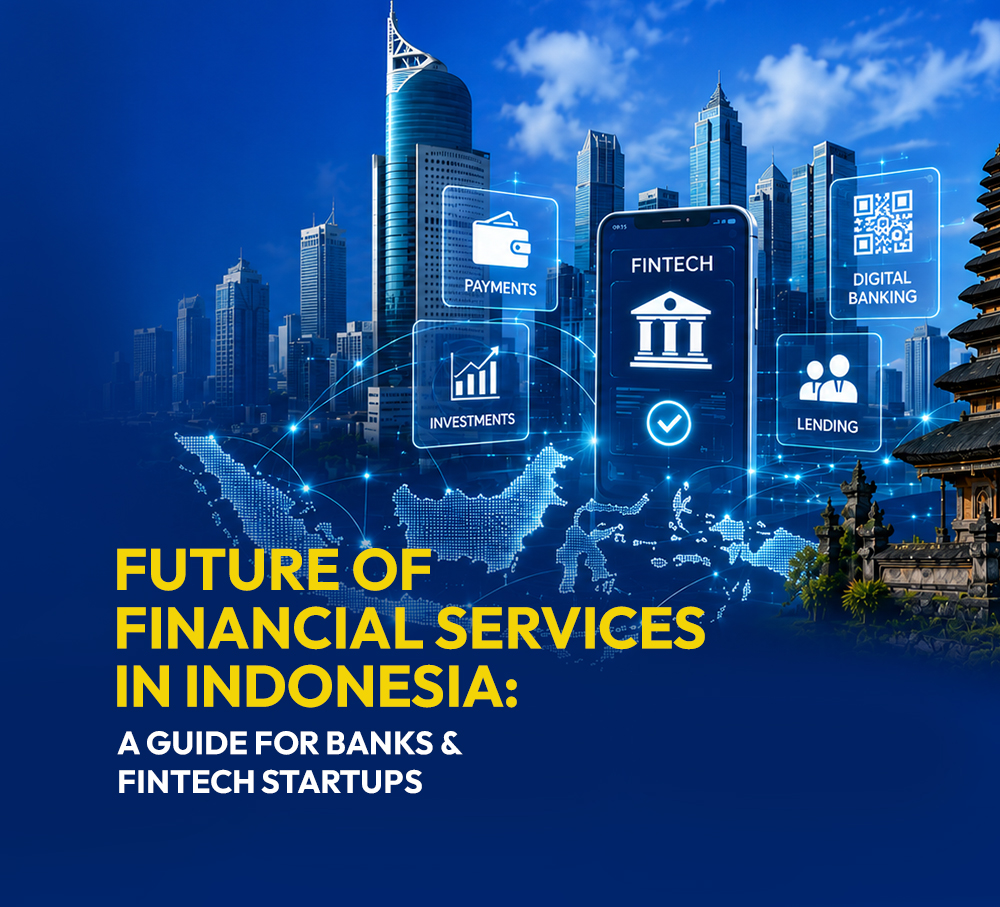
Indonesia stands at the center of Southeast Asia’s financial growth story. With a population exceeding 270 million and a rapidly expanding middle class, the country is witnessing strong adoption of mobile banking, digital wallets, and alternative lending platforms. Financial inclusion remains a national priority, while regulators are strengthening governance, cybersecurity, and capital frameworks. For banks and fintech startups, the opportunity lies in aligning innovation with compliance and scale. Financial services technology is no longer optional, it defines competitiveness. As institutions reassess infrastructure, partnerships, and risk models, the Indonesian market presents both measurable growth potential and structural challenges that demand strategic clarity.
Indonesia’s Financial Services Market: Size, Growth, and Structural Shifts
Indonesia’s banking sector continues to expand alongside steady GDP growth. The country maintains one of ASEAN’s largest banking asset bases, supported by strong retail consumption and SME activity. Digital adoption is accelerating: mobile banking usage has grown consistently year-on-year, while electronic money transactions have surged in both volume and value.
Indonesia still has a significant underbanked population, particularly in rural regions. This creates room for digital banks, microfinance institutions, and fintech lenders to expand reach. SMEs contribute more than 60% of national GDP, yet many remain underserved by traditional lending channels. The financing gap represents a substantial opportunity for scalable banking solution Indonesia platforms that combine credit analytics, alternative data scoring, and automated onboarding.
Real-time payment infrastructure and QR-based transactions are strengthening interoperability between banks and fintech providers. Embedded finance is becoming more visible within e-commerce and ride-hailing ecosystems, integrating credit and payment services directly into consumer platforms. For delegates and sponsors, the takeaway is clear: financial services technology is driving transaction growth, customer acquisition, and operational efficiency across Indonesia’s banking sector.
Regulatory Direction: What Banks and Fintechs Must Prepare For
Indonesia’s financial oversight is managed primarily by Bank Indonesia (BI) and the Financial Services Authority (OJK). Over recent years, both institutions have tightened supervision of digital banking, peer-to-peer lending, and payment providers.
Digital bank licensing requirements now include minimum capital thresholds, governance standards, and cybersecurity controls. Regulators are also increasing scrutiny of buy-now-pay-later (BNPL) services and consumer lending platforms to prevent over-indebtedness. For fintech startups, compliance costs are rising alongside growth expectations.
Data governance is another priority. Cross-border data flows, customer privacy, and cloud hosting arrangements must align with national regulatory standards. Financial institutions adopting cloud infrastructure must clearly define accountability within shared service environments.
For banks seeking regional expansion, aligning with a compliant banking solution Indonesia model is critical. Regulatory engagement is no longer reactive; it must be integrated into product design and board oversight. Financial services technology deployments must demonstrate transparency, auditability, and risk reporting capability to satisfy supervisory expectations.
The Technology Stack Redefining Indonesian Banking
Modernisation efforts are reshaping how Indonesian banks operate and compete.
Core Banking and Cloud Adoption
Many institutions are transitioning from legacy core systems to modular, API-driven infrastructure. Cloud adoption is increasing, particularly among digital banks and mid-tier institutions seeking cost efficiency and scalability. Migration projects now focus on interoperability and integration with fintech partners.
AI and Data Analytics
Artificial intelligence is enhancing fraud detection, credit scoring, and customer segmentation. Alternative data sources, such as e-commerce activity and digital payment histories, support SME lending decisions. Advanced analytics improve risk assessment and reduce non-performing loan ratios.
Digital Payments and Open Finance
Indonesia’s QRIS payment standard has accelerated merchant onboarding and interoperability. Real-time settlement systems are supporting faster transaction processing. Open finance initiatives are encouraging API integration between banks, fintech startups, and third-party service providers.
Cybersecurity and Risk Controls
As digital transactions increase, fraud and cyber incidents are also rising. Financial institutions are allocating larger budgets to cybersecurity monitoring, identity verification, and vendor risk management. Robust financial services technology frameworks must include encryption, multi-factor authentication, and continuous threat detection.
For sponsors participating in a regional banking technology exhibition, Indonesia represents strong demand for scalable infrastructure, AI-based compliance tools, and modular core systems that can support high transaction volumes.
Opportunities for Fintech Startups and Strategic Investors
Indonesia’s fintech ecosystem remains one of the most active in Southeast Asia. Venture capital interest has focused on digital lending, payments, wealth management, and Islamic finance solutions.
High-Growth Segments:
- SME lending platforms addressing working capital shortages
- Sharia-compliant fintech products
- Rural microfinance digitisation
- Wealth-tech and robo-advisory platforms
- Cross-border remittance corridors within ASEAN
Investment activity shows ongoing consolidation as larger players acquire smaller fintech firms to strengthen technology capabilities and customer bases. Startups offering RegTech, cybersecurity tools, or cloud-native banking solution Indonesia infrastructure are attracting attention from established financial institutions.
For international investors and technology providers, partnerships with licensed banks can accelerate market entry. Financial services technology vendors offering modular, scalable systems have opportunities to integrate within Indonesia’s expanding digital ecosystem.
Risk, Governance, and Sustainable Growth
Sustained expansion requires disciplined risk oversight. Indonesian banks are strengthening enterprise risk frameworks to address liquidity management, digital fraud, and operational resilience.
Digital lending growth has increased exposure to credit risk. Enhanced stress testing, automated credit assessment models, and diversified funding sources are critical for maintaining stability. Boards are also paying closer attention to cybersecurity metrics and vendor dependencies.
Environmental, Social, and Governance (ESG) considerations are gaining importance. Green financing initiatives and sustainability-linked loans are growing across Indonesia’s banking portfolios. Financial institutions must ensure reporting accuracy and data governance to meet stakeholder expectations.
Financial services technology investments must therefore balance growth with compliance and capital preservation. Institutions that integrate risk controls into product development and infrastructure decisions will be better positioned for long-term stability.
World Financial Innovation Series (WFIS) Indonesia 2026
As Indonesia’s financial sector scales, industry dialogue becomes essential. The upcoming World Financial Innovation Series (WFIS) Indonesia 2026 event will bring together senior banking executives, fintech founders, insurance heads, microfinance experts, regulators, investors, and technology providers to address the country’s strategic priorities.
Event Details:
- Date: 27–28 October 2026
- Venue: Raffles Jakarta
- Speakers: Industry icons, government officials, and policy makers
The event will explore financial services technology infrastructure, digital lending governance, payment innovation, scalable banking solution Indonesia strategies and a lot more. As a leading banking technology exhibition in the region, it offers structured networking, high-level panel discussions, and direct access to decision-makers shaping the future of the financial sector. For delegates, WFIS Indonesia provides actionable insights into the nation’s financial market, where compliance, innovation, and scale must align to sustain progress.