

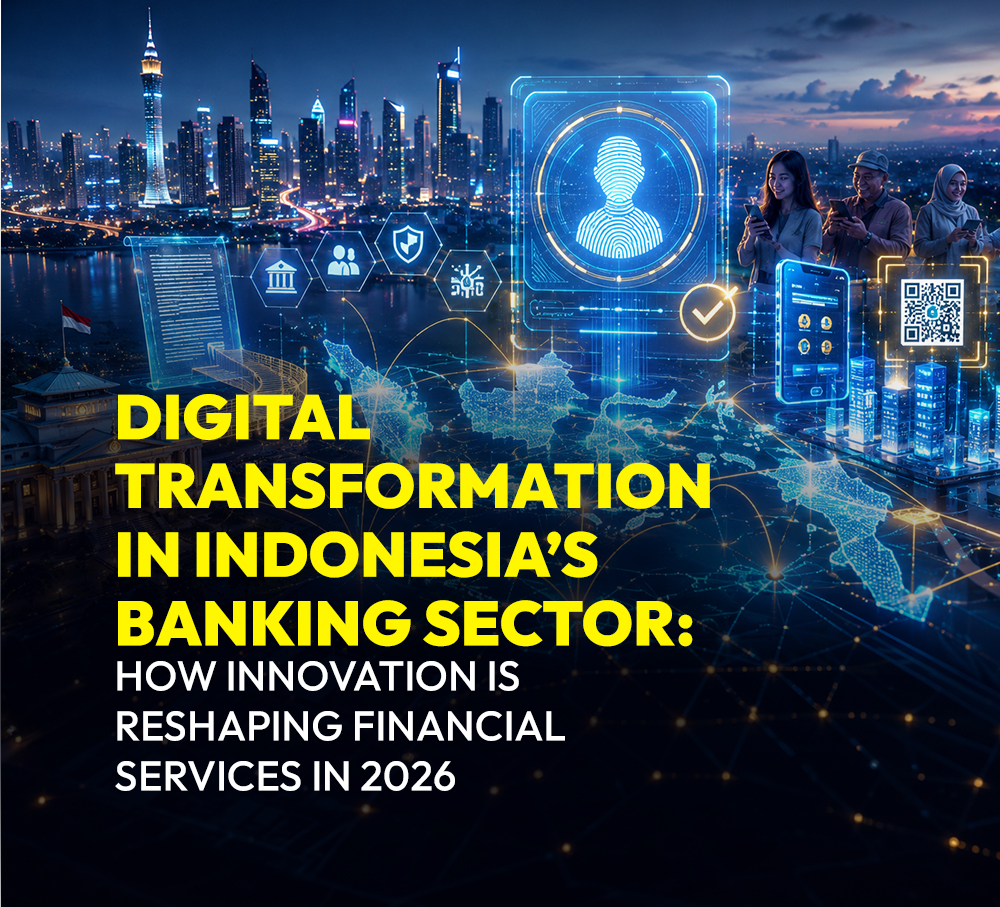
Indonesia’s financial sector is undergoing significant structural change as banks integrate modern technology into operations, customer engagement, and risk management. The country’s banking institutions are responding to a rapidly expanding digital economy and rising consumer demand for mobile-first services. By 2026, digital platforms, data intelligence, and national infrastructure projects have started to redefine how financial institutions deliver products. This shift has also increased collaboration between banks, fintech companies, regulators, and technology providers. As a result, digital transformation Indonesia initiatives are becoming central to banking strategy and industry discussions across the financial services conference Asia circuit.
Indonesia’s Digital Economy and Banking Expansion
Indonesia is Southeast Asia’s largest economy and home to more than 280 million people. Its technology sector continues rapid expansion into 2026 and beyond, with the digital economy projected to reach $130-150 billion by end-2026 and fintech services driving significant growth.
Digital Economy Projections
Indonesia’s digital economy is set to surpass $130 billion in 2026, growing at over 17% annually, with e-commerce generating over $60 billion in revenue. By 2030, it could hit $180 billion (mid-range) or up to $360 billion, supported by 255+ million online users and demographic bonuses.
Fintech Sector Growth
The fintech market is expanding at a 15.47% CAGR, with prepaid cards and digital wallets reaching $7.94 billion in 2026 and payments infrastructure at $130.33 billion. Digital payments transactions exceeded 20 trillion IDR early in the year, boosting inclusion via AI, blockchain, and mobile wallets.
Banks have responded with increased investment in technology infrastructure. Digital account opening, automated loan processing, and real-time payment systems are now common features across many institutions. These developments show how digital transformation Indonesia programs are helping financial institutions improve service delivery while expanding customer reach.
For industry leaders attending a banking innovation summit, Indonesia provides an example of how emerging markets can scale financial technology rapidly with the right policy support and infrastructure.
The Rise of Digital Banks and Fintech Collaboration
Indonesia has seen strong growth in digital-only banking platforms and fintech partnerships. Several traditional banks have launched fully digital subsidiaries to reach younger customers and underserved communities. These platforms operate with lower operational costs and offer faster onboarding through remote verification systems.
Fintech companies are also contributing to this shift. Payment service providers, lending platforms, and wealth technology firms are partnering with banks to introduce new financial products. Application programming interfaces (APIs) allow secure data sharing between financial institutions and technology firms.
These collaborations have enabled services such as:
- Instant payments and mobile wallets
- Digital lending platforms
- Embedded finance within e-commerce platforms
- Digital wealth management tools
Such partnerships support finance innovation by combining banking infrastructure with technology capabilities. For executives attending a financial services conference Asia, these models highlight the importance of cross-industry collaboration.
AI, Data Analytics, and Automation in Modern Banking
Artificial intelligence and advanced data analytics are becoming essential tools for Indonesian banks. Financial institutions now process large volumes of transaction data to improve decision-making and risk assessment.
AI applications in banking include:
- Fraud detection systems that monitor unusual transaction patterns
- Credit scoring models that evaluate alternative data sources
- Customer service chatbots that provide 24-hour assistance
- Predictive analytics used in personalized financial recommendations
Automation also improves operational efficiency. Robotic process automation (RPA) helps banks handle repetitive tasks such as document verification, compliance checks, and transaction processing.
These improvements allow banks to reduce operational costs while improving accuracy. Many executives attending a banking innovation summit now view AI-driven banking operations as a key element of long-term growth strategies.
Regulation, Digital Identity, and Financial Inclusion
Government policy has played a major role in Indonesia’s financial technology expansion. Authorities have introduced regulatory frameworks that support innovation while maintaining financial stability.
The Bank Indonesia payment infrastructure modernization program has enabled faster and more secure transactions across the national financial network. Meanwhile, digital identity initiatives are helping financial institutions verify customers remotely.
Financial inclusion remains a priority for policymakers. Millions of Indonesians still lack access to traditional banking services, particularly in rural regions. Digital banking platforms and mobile payments provide an effective solution to this challenge.
Government programs, combined with private sector investment, have increased the number of Indonesians with access to formal financial services. These developments demonstrate how digital transformation Indonesia policies can support both economic growth and broader financial participation.
Why Industry Events Matter for Banking Innovation
As financial institutions adapt to technology-driven change, leadership forums and industry events have become essential platforms for collaboration. Executives, regulators, fintech founders, and technology providers gather at global forums to discuss strategy, share research, and explore partnerships.
A financial services conference Asia offers a valuable environment where stakeholders can examine trends such as artificial intelligence adoption, digital payments, cybersecurity, and regulatory frameworks.
These gatherings also provide opportunities for sponsors and technology providers to showcase solutions that support finance innovation in banking operations. For decision-makers evaluating digital transformation investments, a banking innovation summit allows direct interaction with industry experts and technology partners.
As Indonesia’s financial sector continues to expand, such forums help connect regional and global stakeholders working toward more efficient financial systems.
Join WFIS Indonesia 2026 – The Next Banking Innovation Summit
World Financial Innovation Series (WFIS) Indonesia 2026 will take place on 27–28 October 2026 at Raffles Jakarta, Indonesia. The event will gather senior banking executives, technology providers, regulators, investors, and fintech founders for two days of insight and networking. The platform features top industry icons, government officials, and policy makers sharing practical perspectives on banking modernization. Delegates, sponsors, and innovators looking to expand partnerships across Southeast Asia should secure participation early and connect with leaders shaping financial services.