

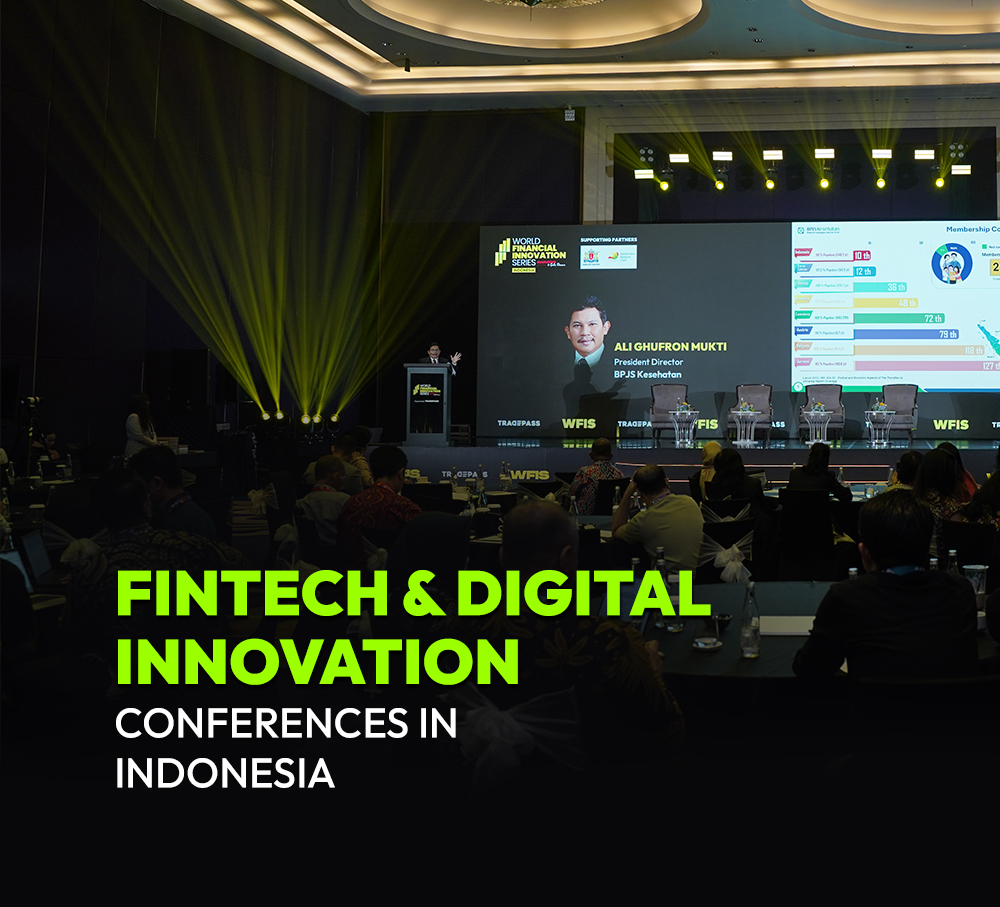
Indonesia’s financial sector is moving through a period of finance and banking transformation, driven by rising digital adoption, regulatory support, and a growing base of technology-first financial institutions. With over 270 million people and a rapidly expanding middle class, the country presents strong demand for accessible and efficient financial services.
In this environment, every fintech conference becomes a critical touchpoint for decision-makers looking to understand market direction, partnerships, and regulatory expectations. Conferences across Indonesia now serve as structured platforms where strategy meets execution, offering practical insights for stakeholders shaping the next phase of financial services.
Indonesia’s Rapidly Expanding Fintech Ecosystem
Indonesia has emerged as one of Southeast Asia’s most active fintech markets. The rise of digital wallets, peer-to-peer lending platforms, and embedded finance solutions reflect both consumer demand and institutional readiness. According to industry estimates, Indonesia’s fintech sector continues to grow at double-digit rates, supported by initiatives from regulators such as Bank Indonesia and the Financial Services Authority (OJK).
Financial inclusion remains a central priority. Millions of Indonesians are still underserved by traditional banking, creating opportunities for fintech firms to expand access through mobile-first solutions. This has led to a surge in startups and increased investments from regional and global players.
A fintech industry conference in Indonesia often mirrors these developments. Sessions typically focus on scaling infrastructure, regulatory compliance, and sustainable growth models. For C-suite leaders, these discussions provide clarity on how to align business expansion with national financial goals while also managing operational risks.
Why Fintech Conferences Matter for Industry Decision-Makers
For executives and senior professionals, conferences are decision-making environments. A well-structured fintech conference therefore brings together regulators, financial institutions, technology providers, and investors in one place, allowing for direct conversations that influence strategy.
One of the key advantages is access to regulatory perspectives. Indonesia’s fintech regulations continue to develop in response to innovation, and staying aligned with policy direction is essential for long-term success.
Another important aspect is partnership development. Many fintech collaborations begin through introductions made at industry events. Whether it is a bank seeking a technology partner or a startup looking for funding, conferences reduce the gap between opportunity and execution. In addition, these events offer exposure to case studies and real-world implementations. Decision-makers can therefore better evaluate what worked in similar markets and apply those learnings within the Indonesian context.
Key Themes Shaping Fintech & Digital Banking Conferences in Indonesia
Indonesia’s fintech discussions are shaped by practical challenges and measurable outcomes rather than abstract concepts. A digital banking conference in the country typically focuses on areas that directly impact scalability and customer adoption. Financial inclusion remains at the core. Panels often examine how digital solutions can extend services to rural and underserved populations without increasing operational costs. This includes discussions on agent banking, mobile platforms, and simplified onboarding processes.
Another major theme is digital infrastructure. As transaction volumes grow, the need for secure and scalable systems becomes more critical. Conferences address topics such as cloud adoption, cybersecurity frameworks, and data protection, all of which are essential for maintaining consumer trust.
Open banking and API integration are also gaining attention. Financial institutions are exploring ways to collaborate with fintech firms to deliver integrated services. These discussions often highlight how partnerships can create new revenue streams while improving customer experience.
Additionally, the role of artificial intelligence and data analytics is becoming prominent. From credit scoring to fraud detection, these technologies are helping institutions make faster and more accurate decisions. Conferences therefore provide a platform to evaluate their practical applications.
Who Attends Fintech & Digital Innovation Conferences
Indonesia’s major fintech events draw a rich, diverse cross-section of the financial ecosystem – from senior bank executives to institutional leaders, looking to identify growth opportunities and operational improvements. Their participation ensures that discussions remain aligned with real business priorities.
Here is an overview of the key attendees:
1. Financial Institution Leaders
- C-Suite & Senior Executives: CEOs, CTOs, CIOs, and CDOs from traditional banks, insurance companies, and asset management firms
- Innovation & Transformation Teams: Heads of Innovation and Digital Transformation teams
2. Fintech Startups
- Founders & Chief Executive Officers
- Product & Technical Leads: Product managers, developers, and engineers
3. Investors & Capital Providers
- Venture Capitalists (VCs) & Private Equity: Early and growth-stage investors
- Corporate Venture Capitalists: Investment arms of major banks, telcos, and conglomerates
4. Technology & Infrastructure Providers
- Big Tech & Cloud Providers: Companies providing the backbone for financial services (e.g., AI, cybersecurity, cloud infrastructure)
- PayTech & RegTech Specialists: Experts in payment processors, gateways, wallets, and compliance technology
5. Regulatory & Governance Bodies
- Policymakers & Regulators: Representatives from central banks and regulatory authorities (e.g., RBI, Federal Reserve, Monetary Authority of Singapore)
- Compliance & Risk Professionals: Specialized staff managing compliance, KYC (Know Your Customer), and AML (Anti-Money Laundering)
6. Supporting Ecosystem
- Consultants & Advisors: Professionals from firms like PwC, BCG, and specialized consultancy boutiques offering insights on industry trends
- Academics & Researchers: Data scientists and researchers presenting studies on digital finance and financial inclusion
The Role of Conferences in Strengthening Indonesia’s Financial Innovation Network
Conferences play a central role in connecting different parts of Indonesia’s financial ecosystem. By bringing together stakeholders from various sectors, they create a network that supports collaboration and knowledge sharing.
Strategic Roles in the Innovation Network –
- Catalysts for Public-Private Synergy: Conferences provide a direct platform for Bank Indonesia (BI) and the Financial Services Authority (OJK) to align regulatory roadmaps with private sector capabilities. This interaction helps shape “guardrails” for emerging sectors like crypto assets and P2P lending.
- Bridge Between Traditional Banking & Fintech: Major summits facilitate the transition from “growth at all costs” to value-based growth by connecting legacy banks with agile fintech partners. Over 60% of digital finance projects in emerging markets now stem from such cross-company collaborations.
- Localized Technology Adoption: Platforms translate global trends, like agentic AI, embedded finance, and open banking, into actionable local strategies tailored for Indonesia’s unique archipelago geography.
- Funding and Scaling Hubs: Platforms also enable high-growth startups to pitch directly to international investors, bridging the gap between local innovation and global capital.
A fintech industry conference, therefore, acts as more than just an event, it becomes a catalyst for long-term growth and collaboration within Indonesia’s financial sector.
Secure Your Seat at Indonesia’s Premier Fintech Industry Conference!
As Indonesia’s fintech sector continues to expand, informed decision-making and meaningful partnerships have never been more critical.
The World Financial Innovation Series (WFIS) returns to Jakarta on 27–28 October 2026 at Raffles Jakarta, bringing together industry leaders, policymakers, and innovators to tackle the sector’s most pressing challenges and opportunities.
Join us to gain actionable insights and position your organization at the heart of Indonesia’s financial growth story!
Register today: https://www.indonesia.worldfis.com/